
𝐑𝐞𝐬𝐞𝐚𝐫𝐜𝐡 𝐀𝐬𝐬𝐨𝐜𝐢𝐚𝐭𝐞 (Full-time, Gulshan-1, Dhaka)
Job Circular: 𝐑𝐞𝐬𝐞𝐚𝐫𝐜𝐡 𝐀𝐬𝐬𝐨𝐜𝐢𝐚𝐭𝐞 Location: International Online Journal Hub (IOJH), Dhaka Employment Type: Full-Time, Office-Based Salary: Negotiable 𝐀𝐛𝐨𝐮𝐭 𝐭𝐡𝐞 𝐑𝐨𝐥𝐞: The 𝐈𝐧𝐭𝐞𝐫𝐧𝐚𝐭𝐢𝐨𝐧𝐚𝐥 𝐎𝐧𝐥𝐢𝐧𝐞 𝐉𝐨𝐮𝐫𝐧𝐚𝐥 𝐇𝐮𝐛 (𝐈𝐎𝐉𝐇) is looking for a highly motivated and research-driven individual to join our professional research team as ‘𝐑𝐞𝐬𝐞𝐚𝐫𝐜𝐡 𝐀𝐬𝐬𝐨𝐜𝐢𝐚𝐭𝐞’. The ideal candidate will possess strong analytical, writing, and data interpretation skills, along with a deep understanding of public health research and scientific publication standards. 𝐊𝐞𝐲 𝐑𝐞𝐬𝐩𝐨𝐧𝐬𝐢𝐛𝐢𝐥𝐢𝐭𝐢𝐞𝐬: Prepare, edit and refine scientific manuscripts for submission to international peer-reviewed journals. Design and conduct research studies, ensuring ethical and methodological integrity. Collect, manage, and analyze data using statistical tools and software (SPSS, Stata, R, Python, etc.). Interpret and summarize research findings into actionable insights and clear reports. Conduct literature reviews and manage citations using appropriate reference management tools. Assist in preparing grant proposals, reports and presentations for internal and external research projects. Collaborate with cross-functional research teams to ensure high-quality outputs aligned with IOJH’s research goals. Participate in training programs, workshops and peer-review activities organized by IOJH. Support the Research Promotion Unit in developing academic and scientific content. 𝐄𝐝𝐮𝐜𝐚𝐭𝐢𝐨𝐧𝐚𝐥 𝐑𝐞𝐪𝐮𝐢𝐫𝐞𝐦𝐞𝐧𝐭𝐬: • MPH (Master of Public Health) – from a recognized institution • MBBS (Bachelor of Medicine, Bachelor of Surgery) – Highly Preferred 𝐀𝐝𝐝𝐢𝐭𝐢𝐨𝐧𝐚𝐥 𝐑𝐞𝐪𝐮𝐢𝐫𝐞𝐦𝐞𝐧𝐭𝐬: ✪ Strong knowledge of statistical tools and software (SPSS, Stata, R, Python, etc.). ✪ Proven understanding of epidemiological methods, research design, and data interpretation. ✪ Excellent command of English writing and communication skills. ✪ Familiarity with academic publication ethics, journal submission processes, and referencing styles. ✪ A proactive, detail-oriented professional with the ability to meet deadlines and work collaboratively. 𝐖𝐡𝐲 𝐉𝐨𝐢𝐧 𝐈𝐎𝐉𝐇? At International Online Journal Hub, we foster an intellectually stimulating environment that connects medical professionals, researchers and academicians to the global scientific community. Joining IOJH means becoming part of a platform that values innovation, knowledge dissemination and professional excellence. 𝐇𝐨𝐰 𝐭𝐨 𝐀𝐩𝐩𝐥𝐲 Interested candidates are invited to apply https://iojh.com.bd/apply-here/ or email your CV and Portfolio to hr.iojhltd@gmail.com with the subject line: “Application for Research Associate”. 𝐈𝐧𝐭𝐞𝐫𝐧𝐚𝐭𝐢𝐨𝐧𝐚𝐥 𝐎𝐧𝐥𝐢𝐧𝐞 𝐉𝐨𝐮𝐫𝐧𝐚𝐥 𝐇𝐮𝐛 (𝐈𝐎𝐉𝐇) Center for Multidisciplinary Research
Statistical Data Analyst (Full-time, Dhaka )
Location: Gulshan 1, DhakaJob Type: Full-Time (Work at Office)Application Deadline: 31st July 2025Salary: Negotiable and commensurate with experience About IOJH International Online Journal Hub (IOJH) is a global platform for knowledge dissemination, promoting scholarly publishing, cutting-edge research, and capacity-building initiatives. Our growing research team is seeking a Statistical Data Analyst who is passionate about data, precision, and research-driven impact. Job Overview As a Statistical Data Analyst at IOJH, you will play a critical role in analyzing research data, generating insights, and contributing to the production of high-impact academic publications and development reports. This role is ideal for candidates who are eager to apply their statistical expertise in real-world research projects and collaborate with an interdisciplinary team. Key Responsibilities Design, manage, and analyze datasets for various research projects Apply advanced statistical models and inferential techniques to interpret complex data Develop data visualizations, dashboards, and reports to support evidence-based decisions Use SPSS, Stata, and Python to perform descriptive and inferential statistical analysis Ensure data integrity, accuracy, and consistency throughout the research cycle Collaborate with researchers, writers, and project managers on data-driven publications Required Qualifications Bachelor’s or Master’s degree in Statistics, Biostatistics, Applied Statistics, Data Science, Mathematics, or any closely related field from a recognized university Strong academic foundation in quantitative research and statistical methods Solid experience in using SPSS, Stata, and Python for data analysis and visualization Knowledge of statistical modeling, hypothesis testing, regression, and survey data analysis Desired Attributes Highly analytical, detail-oriented, and passionate about data accuracy Strong communication skills and the ability to translate data into actionable insights Punctual, disciplined, and dedicated to professional ethics and deadlines Collaborative mindset with the ability to work effectively in a research-intensive environment Why Join IOJH? At International Online Journal Hub (IOJH), we believe data is not just numbers — it’s the foundation of meaningful change. By joining our team, you’ll become part of a mission-driven organization that values integrity, innovation, and impact. Here’s why IOJH is the ideal workplace for aspiring and experienced data analysts: Impactful Research Environment Cross-Disciplinary Collaboration Skill Development & Learning Culture Ethical & Supportive Work Culture Innovation-Driven Projects Career Growth Opportunities Contribution to National Development Apply Here
𝐑𝐞𝐬𝐞𝐚𝐫𝐜𝐡 𝐈𝐧𝐭𝐞𝐫𝐧 (Part-time, Office/Remote)
Who Can Apply: Students and graduates interested in academic research and publications. Responsibilities: – Assist in research projects, data collection, and report writing. – Conduct literature reviews and analysis. – Support research publication and documentation. – Collaborate with senior researchers on academic projects. Requirements: – Strong academic writing and research skills. – Interest in social sciences, humanities, or development studies. – Proficiency in Microsoft Office and Google Docs. Benefits: – Stipend of BDT 10,000 upon successful completion of the internship. – Official internship certificate from IOJH. – Hands-on research experience with global projects. – Mentorship from experienced researchers. – Opportunity to gain experience in scholarly publishing and research methodology. Apply Here
𝐂𝐚𝐦𝐩𝐮𝐬 𝐀𝐦𝐛𝐚𝐬𝐬𝐚𝐝𝐨𝐫 (Part-time / On Campus)
Job Vacancy: Campus Ambassador Organization: International Online Journal Hub (IOJH) Position: Campus Ambassador Location: Remote (Your University Campus) Type: Part-time (Contractual, 3–6 months) Salary: Negotiable Role Overview: As a Campus Ambassador, you will be the official representative of IOJH at your university. You will act as a bridge between IOJH and the student community, promoting our research-based programs and building awareness about academic opportunities. Key Responsibilities: Promote IOJH’s initiatives, training, and research programs within your campus. Identify and engage research-interested students and faculty. Organize small-scale research awareness events, webinars, or discussion forums (online or offline). Collect research data and feedback when needed. Maintain regular communication with the IOJH central team. Contribute to expanding the Young Researchers Development Program (YRDP) network. Who Can Apply: Current undergraduate or postgraduate students enrolled in any university in Bangladesh. Passionate about research, academic development, and leadership. Active in campus activities, clubs, or organizations. Excellent communication and organizational skills. Commitment to work for the full duration of the program. What We Offer: Part time job opportunity as a student. Certificate of recognition from IOJH. Leadership experience in academic promotion and research engagement. Networking with professionals and researchers from across the country and beyond. Preference in future internship or full-time opportunities at IOJH. Opportunity to contribute meaningfully to the academic landscape in Bangladesh. Duration: 3–6 months (flexible, based on academic calendar and program requirements) Application Deadline: 📅 April 30, 2025 Be the face of IOJH at your university and inspire the next generation of researchers! Let’s build a stronger academic future together. Apply Here
Top 5 Research Methodologies Every Beginner Should Know
Research is a fundamental pillar of academic and professional advancement. Whether you’re a student, an aspiring scholar, or a professional exploring new areas, understanding research methodologies is crucial. Research methodologies provide structured approaches to gathering, analyzing, and interpreting data, ensuring that research findings are reliable and valid. For beginners, navigating the world of research can be overwhelming. This article aims to introduce five essential research methodologies that every beginner should know. By understanding these methodologies, students and early-career researchers can make informed decisions about their research approach, leading to more credible and impactful studies. 1. Qualitative Research What is Qualitative Research? Qualitative research is an exploratory approach that seeks to understand human behavior, emotions, experiences, and social phenomena. It focuses on non-numerical data such as words, images, and observations. Key Characteristics of Qualitative Research Subjective and interpretative Focuses on depth rather than breadth Involves open-ended data collection techniques Context-driven analysis Common Qualitative Research Methods Interviews: One-on-one or group discussions to gather in-depth insights. Focus Groups: Small group discussions to explore different perspectives. Observation: Studying subjects in their natural environments. Case Studies: Analyzing specific individuals or situations to draw conclusions. When to Use Qualitative Research When exploring new or complex topics. When understanding emotions, motivations, or behaviors. When quantitative data alone is insufficient to explain a phenomenon. Pros and Cons of Qualitative Research Pros: Provides detailed and rich data. Allows flexibility in data collection. Helps explore complex social and behavioral issues. Cons: Time-consuming and labor-intensive. Difficult to generalize findings. Data analysis can be subjective. 2. Quantitative Research What is Quantitative Research? Quantitative research focuses on numerical data and statistical analysis to test hypotheses and draw conclusions. It is widely used in scientific, business, and social research. Key Characteristics of Quantitative Research Objective and measurable Uses structured data collection tools (e.g., surveys, experiments) Involves statistical analysis Large sample sizes for generalizability Common Quantitative Research Methods Surveys: Collecting data from a large group using structured questions. Experiments: Conducting controlled tests to analyze cause-and-effect relationships. Observational Studies: Measuring variables without direct intervention. Longitudinal Studies: Observing subjects over an extended period. When to Use Quantitative Research When measuring variables objectively. When testing hypotheses through statistical analysis. When making data-driven decisions in business or policy-making. Pros and Cons of Quantitative Research Pros: Provides statistical validity and reliability. Easier to generalize findings. Allows comparison of different variables. Cons: May overlook contextual details. Can be rigid and limit deep exploration. Requires expertise in statistical analysis. 3. Mixed-Methods Research What is Mixed-Methods Research? Mixed-methods research combines both qualitative and quantitative approaches to gain comprehensive insights into a research problem. It integrates numerical data with in-depth analysis to provide a holistic understanding. Key Characteristics of Mixed-Methods Research Uses both numerical and non-numerical data. Merges different types of data collection techniques. Provides both breadth and depth in research findings. Common Mixed-Methods Approaches Sequential Explanatory: Collects quantitative data first, then qualitative data to explain results. Sequential Exploratory: Starts with qualitative research, followed by quantitative validation. Concurrent Embedded: Collects both qualitative and quantitative data simultaneously. When to Use Mixed-Methods Research When one method alone does not provide complete answers. When seeking both statistical validation and contextual understanding. When analyzing complex research problems. Pros and Cons of Mixed-Methods Research Pros: Provides a comprehensive analysis. Reduces biases of single-method research. Enhances the reliability of findings. Cons: Requires expertise in both qualitative and quantitative methods. More time-consuming and resource-intensive. Data integration can be challenging. 4. Experimental Research What is Experimental Research? Experimental research is a scientific method that tests hypotheses by manipulating variables in a controlled environment. It helps establish cause-and-effect relationships. Key Characteristics of Experimental Research Involves manipulation of variables. Uses control and experimental groups. Ensures rigorous testing conditions. Common Experimental Research Designs Randomized Control Trials (RCTs): Participants are randomly assigned to different groups. Pre-Test/Post-Test Design: Measures changes before and after applying a treatment. Factorial Experiments: Analyzes multiple variables simultaneously. When to Use Experimental Research When testing new treatments, drugs, or interventions. When establishing causation rather than correlation. When replicating scientific studies. Pros and Cons of Experimental Research Pros: Provides strong evidence of causality. Highly controlled for minimizing biases. Replicable for validation. Cons: Ethical concerns in human experiments. High costs and logistical complexity. May not reflect real-world conditions. 5. Action Research What is Action Research? Action research is a problem-solving methodology that involves actively participating in the research process to improve practices, strategies, or solutions. Key Characteristics of Action Research Iterative and cyclical process (plan-act-observe-reflect). Collaborative and participatory approach. Focuses on real-world problem-solving. Common Action Research Approaches Participatory Action Research (PAR): Engages community members in the research process. Educational Action Research: Helps educators improve teaching methodologies. Organizational Action Research: Applied in business and management to enhance work processes. When to Use Action Research When aiming for immediate improvements in a specific setting. When involving stakeholders in the research process. When exploring practical, real-world issues. Pros and Cons of Action Research Pros: Directly impacts real-world problems. Engages participants in meaningful ways. Flexible and adaptable. Cons: May lack generalizability. Can be subjective due to personal involvement. Requires long-term commitment. Conclusion Research methodologies provide the foundation for conducting structured and credible studies. Whether you are exploring human behavior through qualitative research, testing hypotheses with quantitative analysis, or integrating both in mixed-methods research, understanding these methodologies is essential for any beginner. Each research method has its strengths and limitations, and the choice depends on the research question, available resources, and desired outcomes. By mastering these top five research methodologies, beginners can build a strong foundation for academic and professional research success. Do you have a research topic in mind but are unsure which methodology to use? Let us know in the comments!
How to Start Your Research Career as a Student

Starting a research career as a student can be both exciting and overwhelming. Research is a critical skill that allows students to contribute to their field, develop critical thinking abilities, and gain valuable experience for future academic or professional careers. However, many students do not know where to begin, how to find research opportunities, or how to develop essential research skills. This comprehensive guide will walk you through every step of starting your research career, from identifying your interests to publishing your first paper. Whether you are an undergraduate or a graduate student, this guide will provide the necessary insights to help you succeed in the world of research. 1. Understanding the Importance of Research Why Should Students Get Involved in Research? Enhances problem-solving and analytical skills Strengthens academic and professional resumes Provides opportunities for scholarships and grants Opens doors to advanced degrees (Master’s, PhD) Contributes to knowledge in a particular field Builds networking opportunities with professionals and academics Types of Research for Students Theoretical Research: Literature-based research focusing on new theories or models. Empirical Research: Collecting and analyzing data to test hypotheses. Experimental Research: Conducting experiments in a controlled setting. Interdisciplinary Research: Combining multiple fields to solve complex problems. Review Papers and Meta-Analysis: Summarizing and analyzing previous studies. 2. Identifying Your Research Interests How to Find Your Research Passion Reflect on subjects you enjoy the most. Consider real-world problems you want to solve. Read academic journals and books to explore trending research topics. Attend conferences, webinars, and lectures. Selecting a Research Topic Ensure it aligns with your field of study. Choose a topic that has existing literature but still has research gaps. Discuss your interests with professors or mentors. 3. Finding Research Opportunities Approaching Professors and Mentors Identify faculty members working in your area of interest. Send a professional email expressing your interest in research. Offer to assist with ongoing research projects. Show commitment and enthusiasm. Joining Research Groups and Labs Many universities have research labs that welcome student assistants. Look for open positions in departmental websites and bulletin boards. Applying for Research Internships Seek internships at research institutions, think tanks, and NGOs. Some well-known student research programs include: Research Experiences for Undergraduates (REU) MITACS Globalink (Canada) Summer Research Programs (Many universities offer these globally) 4. Developing Research Skills Critical Skills for Student Researchers Literature Review: Learning how to find and analyze academic sources. Data Collection & Analysis: Understanding qualitative and quantitative methods. Academic Writing: Improving skills for writing papers and research proposals. Statistical Software: Learning SPSS, R, Python, or STATA. Citation Management: Using tools like Mendeley, Zotero, or EndNote. Time Management: Organizing research tasks effectively. Enrolling in Research Methodology Courses Many universities offer research methodology courses that teach: How to design a research study How to write a research proposal Ethical considerations in research 5. Conducting Your First Research Project Steps to Conduct Research as a Student Choose a Research Question: Define a specific and clear question. Conduct a Literature Review: Read academic papers to understand past work. Develop a Research Plan: Decide on methods, data collection, and analysis. Collect Data: Conduct experiments, surveys, or case studies. Analyze Data: Use statistical tools or qualitative analysis. Write a Research Paper: Structure it properly with an introduction, methodology, results, discussion, and conclusion. Common Challenges for Student Researchers Limited access to academic journals Lack of funding Difficulty in understanding research methodologies Finding the right mentor or advisor Solutions: Use open-access journals, apply for research grants, seek guidance from senior researchers, and take online courses. 6. Publishing and Presenting Your Research How to Write a Research Paper for Publication Follow the standard format (Abstract, Introduction, Methods, Results, Discussion, Conclusion). Ensure proper referencing and citation. Avoid plagiarism by using plagiarism-checking tools like Turnitin. Choosing the Right Journal Look for journals that match your research area. Consider impact factor and reputation. Ensure the journal follows a peer-review process. Presenting Research at Conferences Submit abstracts to student research conferences. Prepare a clear and engaging PowerPoint presentation. Practice public speaking and answer questions confidently. 7. Applying for Research Grants and Funding Types of Research Funding for Students University grants Government research scholarships Private foundations and research organizations How to Write a Strong Grant Proposal Clearly define your research objectives. Explain the significance and impact of your research. Provide a detailed budget plan. 8. Networking and Collaborating in Research Building a Research Network Connect with professors, researchers, and fellow students. Attend workshops and research seminars. Join online research communities like ResearchGate and Academia.edu. Collaborating with Other Researchers Join student research groups. Work with interdisciplinary teams. Co-author research papers with peers or professors. 9. Preparing for a Future Research Career Pursuing Higher Studies (Master’s and PhD) Apply for graduate programs related to your research interest. Develop a strong research portfolio. Seek recommendations from mentors and advisors. Career Options for Researchers Academic (Professor, Lecturer, Research Scientist) Industry Research (R&D in corporations) Government and Policy Research (Think tanks, NGOs) Entrepreneurship (Startups focusing on innovation and research) 10. Final Tips and Advice for Aspiring Student Researchers Key Takeaways Start early and stay curious. Be proactive in finding research opportunities. Develop strong writing and analytical skills. Network with researchers and industry professionals. Stay persistent despite challenges. Resources for Student Researchers Google Scholar (scholar.google.com) for academic papers PubMed for medical and biological research IEEE Xplore for engineering and technology Coursera, edX, Udemy for research methodology courses Conclusion Starting a research career as a student may seem challenging at first, but with dedication and the right approach, you can make significant contributions to your field. By following this step-by-step guide, you will be well-prepared to embark on your research journey, gain valuable experience, and set the foundation for a successful academic or professional career. Would you like more insights on specific areas of research? Let us know in the comments!
How to Choose the Right Journal for Your Research

Selecting the right journal for your research is a crucial step in the academic publishing process. A well-matched journal ensures that your research reaches the appropriate audience, maximizes its impact, and enhances your academic reputation. However, with thousands of journals available across various disciplines, choosing the right one can be overwhelming. This guide will walk you through the key factors to consider when selecting a journal for your research, helping you make an informed decision that increases your chances of publication. 1. Understanding Your Research Scope and Objectives Clarify Your Research Focus Before choosing a journal, clearly define the scope and objectives of your research. Ask yourself: What is the main subject area of my research? Who is my target audience? What type of impact do I want my research to have? Align with Journal Scope Journals have specific aims and scopes that outline the type of research they publish. Carefully review the journal’s description and past publications to ensure your research aligns with their focus. Tip: If your research involves interdisciplinary topics, consider journals that accept cross-disciplinary studies. 2. Journal Reputation and Impact Factor Why Journal Reputation Matters Publishing in a reputable journal enhances the credibility of your research. Consider the following when assessing journal reputation: Impact Factor (IF): Measures the average number of citations articles in the journal receive. Journal Ranking: Check if the journal is indexed in well-known databases such as Scopus, Web of Science, or PubMed. Publisher Reputation: Ensure the journal is published by a well-known and ethical organization. Finding Journal Metrics You can find impact factors and rankings from sources like: Journal Citation Reports (JCR) SCImago Journal Rank (SJR) Google Scholar Metrics Tip: While impact factor is important, it should not be the sole criterion for journal selection. Consider relevance and audience as well. 3. Open Access vs. Subscription-Based Journals Understanding Open Access Open access (OA) journals make articles freely available to the public, increasing visibility and accessibility. Benefits include: Wider readership and greater citations Immediate access for researchers and practitioners Compliance with funding agency requirements Subscription-Based Journals Traditional subscription-based journals restrict access to institutions or individuals who pay for the content. These journals often have high impact factors and established reputations but may limit readership. Tip: Some journals offer a hybrid model where authors can choose to publish OA for a fee. 4. Reviewing Journal Guidelines and Requirements Manuscript Formatting and Structure Each journal has specific guidelines regarding: Word count Citation style (APA, MLA, Chicago, etc.) Figures and tables format Supplementary material submission Submission Process and Review Timeline Some journals have a faster review process than others. Check estimated review times and acceptance rates before submitting. Ensure the journal follows a peer-review process to maintain research quality. Tip: Carefully follow the journal’s submission requirements to avoid immediate rejection. 5. Avoiding Predatory Journals What Are Predatory Journals? Predatory journals exploit researchers by charging high publication fees without providing rigorous peer review. They lack transparency and often have misleading impact factors. How to Identify Predatory Journals The journal is not indexed in credible databases. The publisher requests submission fees before peer review. The journal lacks a clear editorial board with recognized experts. The journal frequently emails you for submissions without prior engagement. Tip: Use resources like Beall’s List or DOAJ (Directory of Open Access Journals) to verify journal legitimacy. 6. Checking Indexing and Abstracting Services Why Indexing Matters A journal indexed in major databases ensures credibility and wider discoverability. Some key indexing services include: Scopus Web of Science PubMed (for health sciences) IEEE Xplore (for engineering and technology) How to Check Indexing Visit the journal’s website and verify its indexing claims by cross-checking with the database’s official site. Tip: Indexed journals increase the chances of citations and recognition in academia. 7. Evaluating Acceptance Rate and Publication Speed Understanding Journal Acceptance Rates High-impact journals often have low acceptance rates (10-30%). Lower-ranked journals may accept a wider range of submissions. Choose a journal where your research has a realistic chance of acceptance. Considering Publication Speed Some journals take months or even years to publish accepted papers. If you need fast publication, look for journals with a rapid review process. Tip: Some journals offer fast-track processing for an additional fee. 8. Evaluating Journal Ethical Standards and Policies Why Ethics Matter Journals must adhere to ethical publishing standards to ensure transparency and integrity. Consider: Plagiarism policies Data sharing and research integrity guidelines Conflict of interest disclosures Checking Ethical Compliance Reputable journals follow guidelines set by organizations like COPE (Committee on Publication Ethics). The journal should have clear peer review and editorial policies. Tip: Avoid journals with unethical practices, as they can damage your academic reputation. 9. Considering Journal Costs and Funding Options Publication Fees Open Access Fees (APC – Article Processing Charges): Some OA journals charge fees to make research freely available. Page Charges: Some journals charge based on manuscript length. Color Figure Fees: Additional costs for color images in print editions. Funding Your Publication Many universities and research institutions provide grants for publication fees. Some funding agencies require publications in OA journals. Tip: Always check if the journal charges fees before submission. 10. Making the Final Decision Summarizing Key Factors When choosing a journal, consider: Scope and audience Impact factor and reputation Open access vs. subscription model Peer review process and acceptance rate Ethical policies and indexing Publication speed and costs Using Journal Finders Some tools help match your research with suitable journals: Elsevier Journal Finder Springer Journal Suggester IEEE Publication Recommender Tip: Make a shortlist of 3-5 journals and assess them before finalizing your choice. Conclusion Choosing the right journal is a critical step in the research publication process. By carefully evaluating factors like journal scope, impact factor, indexing, ethical standards, and costs, you can maximize your research’s visibility and credibility. Taking the time to make an informed decision will not only increase your chances of publication but also ensure your research reaches the right audience.
Common Mistakes in Research Papers & How to Avoid Them

Writing a research paper is an essential part of academic and professional work, allowing scholars to contribute to their field of study. However, many researchers—especially early-career academics and students—make common mistakes that reduce the effectiveness and credibility of their work. These errors can lead to manuscript rejection, poor grades, or misinterpretation of results. In this detailed guide, we will highlight the most frequent mistakes found in research papers and provide practical solutions to avoid them. 1. Poor Research Question or Hypothesis Mistake: Choosing a vague or overly broad research question Lack of a clear hypothesis or objective Not aligning the research question with the study’s methodology How to Avoid It: Formulate a specific, clear, and researchable question. Ensure your question is neither too broad nor too narrow. Align your hypothesis with existing literature and your chosen methodology. Example: Instead of “How does social media affect mental health?”, try “How does Instagram use impact anxiety levels among university students in Bangladesh?” 2. Inadequate Literature Review Mistake: Failing to conduct a comprehensive literature review Using outdated or non-relevant sources Not critically analyzing existing research How to Avoid It: Use credible, peer-reviewed sources and ensure citations are up to date. Summarize key findings rather than simply listing sources. Identify gaps in the literature and explain how your study addresses them. 3. Weak Methodology Mistake: Using incorrect research methods for the study Failing to justify methodological choices Poor sampling techniques leading to bias How to Avoid It: Select a methodology that aligns with your research objectives. Clearly explain why you chose a particular method. Ensure your sample size is adequate and representative. 4. Lack of Data Integrity and Analysis Errors Mistake: Misinterpreting statistical results Using inappropriate statistical tests Failing to check for errors in data collection How to Avoid It: Double-check data accuracy before analysis. Use statistical tools that match your research type. Seek expert advice or peer review for complex analyses. 5. Poor Organization and Structure Mistake: Incoherent flow of ideas Mixing results with discussion Missing essential sections (Abstract, Introduction, Conclusion) How to Avoid It: Follow a structured format (IMRAD: Introduction, Methods, Results, and Discussion). Ensure smooth transitions between sections. Summarize key points at the end of each section. 6. Plagiarism and Citation Errors Mistake: Copying text without proper citation Incorrect or inconsistent referencing style Over-reliance on direct quotes How to Avoid It: Use plagiarism detection tools before submission. Paraphrase and cite all sources correctly. Follow the journal’s or institution’s preferred citation style (APA, MLA, Chicago, etc.). 7. Overcomplicated or Ambiguous Writing Mistake: Using unnecessary jargon Writing overly long and complex sentences Lack of clarity and precision How to Avoid It: Use clear, concise, and straightforward language. Avoid redundancy and keep sentences direct. Get feedback from colleagues before submission. 8. Weak Conclusion Mistake: Simply repeating results without interpretation Failing to connect findings with the research question Not suggesting future research directions How to Avoid It: Summarize key findings in a meaningful way. Discuss the implications of your research. Provide suggestions for further research in the field. 9. Ignoring Formatting and Submission Guidelines Mistake: Not following journal-specific or institutional guidelines Poorly formatted tables, figures, and references Submitting before proofreading How to Avoid It: Carefully read and follow submission instructions. Use consistent formatting throughout. Proofread thoroughly or seek professional editing services. 10. Failure to Address Reviewer Feedback Mistake: Ignoring or dismissing reviewer comments Making incomplete or vague revisions Submitting without addressing major concerns How to Avoid It: Respond to each reviewer comment professionally and in detail. Revise the paper carefully and provide a response letter. Seek guidance from mentors or senior researchers when needed. Conclusion Avoiding common mistakes in research papers enhances credibility, improves chances of publication, and contributes to academic integrity. By focusing on a clear research question, conducting a strong literature review, using appropriate methodology, and ensuring proper writing and formatting, researchers can produce high-quality papers. Whether you are a beginner or an experienced researcher, continuous learning and improvement in research writing are key to success. By implementing these best practices, you can increase your chances of producing a well-received and impactful research paper. Happy researching!
Step-by-Step Guide to Publishing in a Peer-Reviewed Journal

Publishing in a peer-reviewed journal is a crucial milestone for researchers, students, and academics. It enhances the credibility of research, helps in career advancement, and contributes to the global knowledge pool. However, the process can be daunting for beginners. This comprehensive guide breaks down the entire process step-by-step, from selecting the right journal to handling peer review and final publication. What Is Peer Review? Peer review is the evaluation of a research manuscript by experts in the field before publication. It ensures that the study meets academic standards, is methodologically sound, and contributes to existing knowledge. Types of Peer Review Single-blind review: Reviewers know the author’s identity, but authors do not know the reviewers. Double-blind review: Both authors and reviewers remain anonymous. Open review: Authors and reviewers are aware of each other’s identities. Why Is Peer Review Important? Ensures research quality and integrity. Provides constructive feedback for improvement. Enhances credibility and reputation. Step 1: Choosing the Right Journal Factors to Consider When Selecting a Journal Scope and Aim: Ensure the journal aligns with your research area. Impact Factor and Reputation: Higher impact factors indicate greater influence. Open Access vs. Subscription-Based: Decide based on accessibility and funding. Acceptance Rate: Consider the probability of acceptance. Publication Speed: Some journals take longer to process manuscripts. How to Identify Suitable Journals Use journal finder tools (e.g., Elsevier Journal Finder, Springer Journal Suggester). Review the journal’s author guidelines. Check previous publications to understand their quality. Step 2: Preparing Your Manuscript Essential Sections of a Research Paper Title: Concise and informative. Abstract: A summary of the study (150-250 words). Keywords: 3-6 words that reflect the main themes. Introduction: Background, research gap, and objectives. Methodology: Detailed research design, data collection, and analysis. Results: Key findings with supporting data. Discussion: Interpretation of results and comparison with existing research. Conclusion: Summary, implications, and future directions. References: Properly formatted citations. Formatting and Citation Styles Follow the journal’s formatting guidelines (APA, MLA, Chicago, etc.). Use reference management tools (Zotero, EndNote, Mendeley). Step 3: Writing a Strong Cover Letter A cover letter introduces your manuscript to the editor. It should include: A brief summary of your research. Why the study is suitable for the journal. A statement confirming the manuscript is original and not under review elsewhere. Example Cover Letter: “Dear [Editor’s Name], I am pleased to submit our manuscript titled ‘[Title of Your Paper]’ for consideration in [Journal Name]. Our research explores [brief summary], which aligns with the journal’s scope. We believe our findings contribute to [specific contribution]. Thank you for considering our submission.” Step 4: Submitting Your Manuscript Submission Process Register on the journal’s online submission portal. Upload the manuscript, cover letter, and supporting documents (data files, ethical approvals, etc.). Complete the author declarations and conflict-of-interest statements. Common Submission Mistakes Not following formatting guidelines. Missing required documents. Submitting to multiple journals simultaneously (not allowed). Step 5: The Peer Review Process What Happens After Submission? Editorial Screening: The editor checks for plagiarism, scope, and formatting. Peer Review: Experts evaluate the manuscript. Decision Making: The editor makes a decision based on reviewer feedback. Author Revisions: If necessary, authors revise and resubmit. Possible Review Outcomes Accept without changes: Rare but ideal. Minor revisions: Small corrections required. Major revisions: Significant changes needed. Reject with resubmission option: Encourages substantial improvements. Reject outright: Manuscript does not meet journal standards. Step 6: Responding to Reviewer Comments How to Handle Reviewer Feedback Be Professional and Respectful: Even if you disagree. Address All Comments: Provide clear explanations for changes. Use a Response Letter: Outline your revisions and justifications. Example Response: “Reviewer 1 suggested clarifying the methodology. We have revised Section 3.2 to provide additional details on data collection.” Step 7: Final Acceptance and Proofreading Final Checks Before Acceptance Ensure all requested changes are made. Double-check references and formatting. Verify authorship and acknowledgments. Proofreading and Final Edits Use tools like Grammarly or professional proofreading services. Read the final version aloud to catch errors. Step 9: Publication and Promotion Types of Publication Early Online Release: Available before appearing in print. Full Journal Issue: Published in a specific volume and issue. How to Promote Your Research Share on Social Media (LinkedIn, ResearchGate, Twitter). Present at Conferences. Write Blog Summaries. Engage with the Research Community. Conclusion Publishing in a peer-reviewed journal requires careful planning, persistence, and attention to detail. By following this step-by-step guide, researchers can navigate the process successfully and contribute valuable knowledge to their field.
Assessing The Efficacy of Semaglutide on Glycaemia Control and Weight Reduction among Patients with Type 2 Diabetes at the Outpatient Department of Teaching Hospital
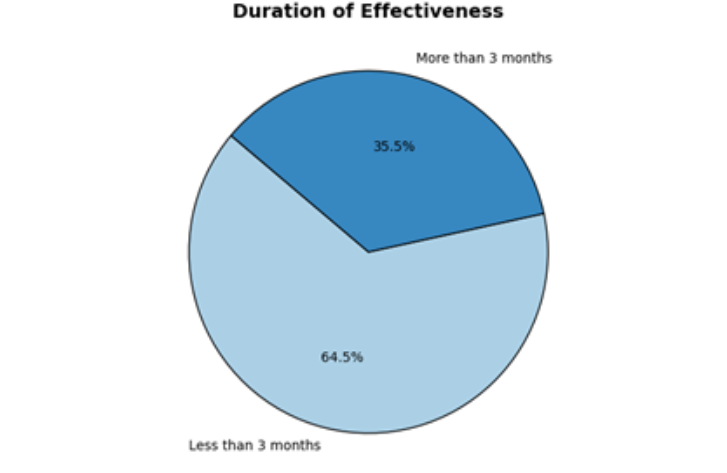
Figure 1: Pie Chart of the Study Population Based on the Effectiveness of Medication In recent research conducted on 31 Type 2 diabetes patients, valuable insights were gathered into both the demographics of the study population and their experiences with diabetes management. The study aimed to highlight factors such as gender, age, medication effectiveness, side effects, and knowledge regarding diabetes treatment. Here, we break down the key findings of this study. Demographics of the Study Population The study revealed a predominantly female population, with 93.5% of participants being women. The age distribution showed that the majority (64.5%) were between 18-39 years old. When it came to education, a significant 64.5% of participants had attained a bachelor’s degree or higher, indicating a highly educated group. In terms of employment, the majority (48.4%) were fully employed, while 45.2% were retired. Notably, a large portion (87.1%) of the population had a monthly income above 50,000 BDT, though only 6.5% had health insurance coverage, highlighting a gap in access to healthcare services for many participants. In terms of diabetes history, 38.7% of the participants had been diagnosed with Type 2 diabetes within the past year, while another 38.7% had been living with the condition for 1-5 years. The majority (77.4%) were taking medications for their diabetes, with the most common being Comet XR (12.6%), Metformin (6.3%), and Diamicron (5.0%). Notably, 83.9% of the participants had reported recent changes in their diabetes condition. A concerning 54.8% of participants also had comorbidities, with high blood pressure being the most common (35.4%). Semaglutide, a medication used for managing diabetes, was regularly used by 93.5% of the participants, though 64.5% experienced side effects. The primary challenge in using Semaglutide was its cost (67.7%), but many patients reported positive outcomes, with 83.9% experiencing weight loss. Medication Effectiveness and Side Effects and Weight Loss After Semaglutide Use When examining the effectiveness of diabetes treatments, the study found that 64.5% of participants reported the effectiveness of their medication lasted less than three months. Additionally, the bar chart revealed that most patients (75%) had a modest reduction of 1-2% in symptoms, while a smaller percentage (7.1%) experienced a 2-3% reduction. Semaglutide’s side effects were another significant finding of the study. A considerable number of participants experienced nausea (25 patients), vomiting (20 patients), dizziness (14 patients), and even stomach pain or drowsiness (2 patients). Despite the side effects, Semaglutide led to significant weight loss in many participants, with the majority (83.9%) losing weight after regular use. The most common weight loss category was between 3.5-7 kg, observed in over 10 individuals. Knowledge About Diabetes The study population exhibited a high level of diabetes-related knowledge. An overwhelming 93.5% of participants recognized that excessive sugar intake can lead to diabetes, and 83.9% understood the relationship between diabetes and insulin irregularities. Interestingly, while 51.6% of participants believed diabetes is curable, 48.4% disagreed. Additionally, all participants correctly identified a fasting blood sugar level of 200 mg/dl as high. Notably, 87.1% of participants prioritized diet and exercise over medication for controlling diabetes. Financial Impact and Healthcare Access Financial burden remains a significant concern for many diabetic patients. While 64.5% of participants reported no difficulty affording their medication, a smaller group (6.5%) found it extremely difficult. Furthermore, only 16.1% had skipped or reduced their medication due to cost. Access to healthcare services was also a crucial factor, with 58.1% of patients visiting their doctor every 4-6 months, and 71% living within 5 km of their healthcare provider. The majority used private vehicles (67.7%) to visit healthcare providers, followed by public transport (29.0%). Figure 2: Bar Chart of the Study Population Based on the Effectiveness of Treatment on Percentage Reduction